Best Web Hosting Services for Small Businesses in 2026
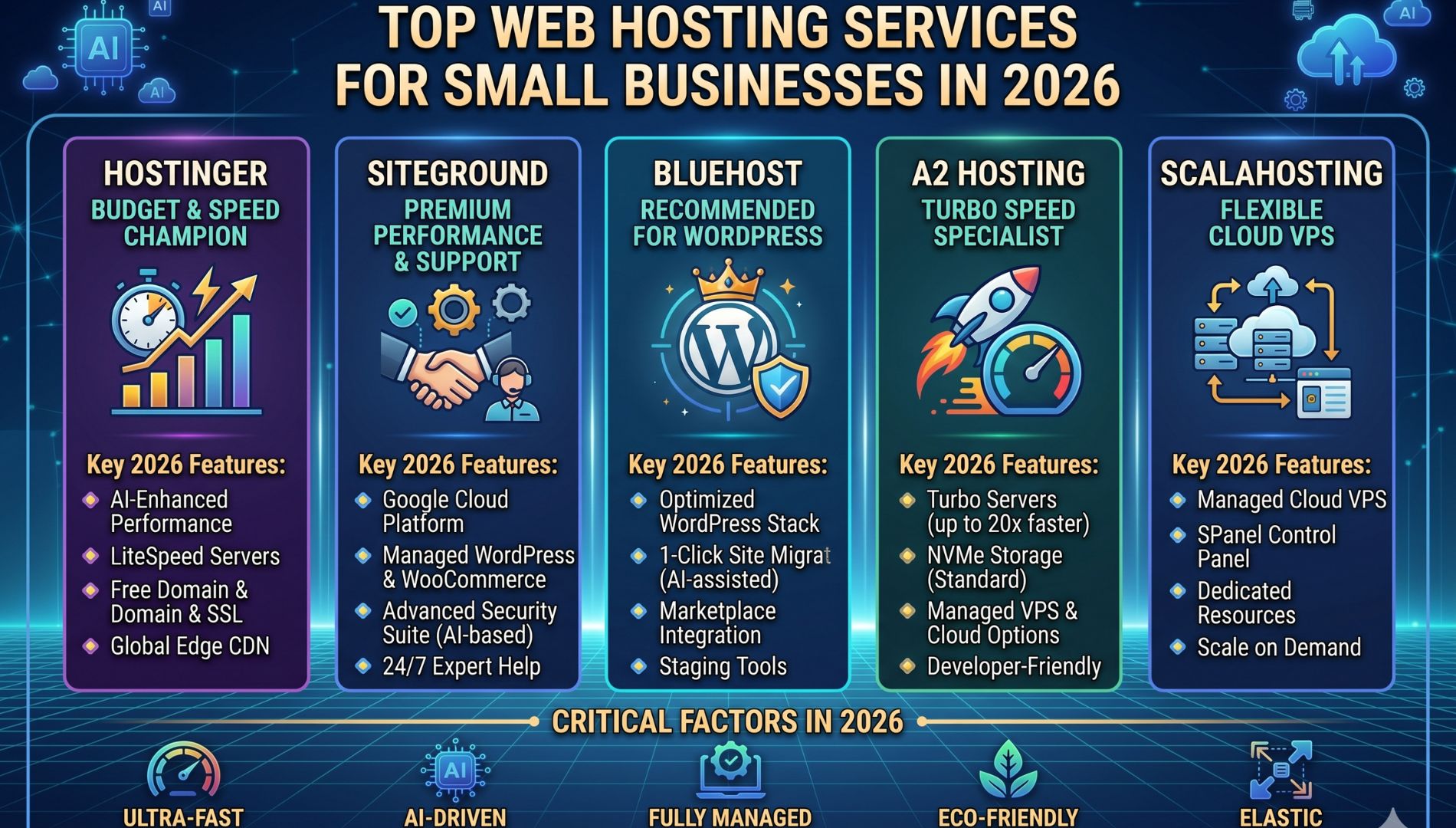
In today's digital world, having a strong online presence is essential for every small business. Whether you run an e-commerce store, a local service company, a startup, or a professional portfolio website, selecting the Best Web Hosting Services for Small Businesses in 2026 can significantly impact your website's performance, security, and success.
With advancements in cloud technology, AI-powered hosting, and enhanced cybersecurity measures, web hosting services have become more powerful and reliable than ever. This guide will help small business owners understand the different hosting options available and choose the best solution for their needs.
Why Web Hosting Matters for Small Businesses
A website is often the first point of contact between a business and potential customers. Poor website performance can lead to lost visitors, lower search engine rankings, and reduced sales opportunities.
A reliable web hosting provider offers:
- Fast website loading speeds
- High uptime guarantees
- Strong security protection
- Regular backups
- Technical support
- Scalability for business growth
Choosing the right hosting service ensures your website remains accessible, secure, and efficient around the clock.
Types of Web Hosting Services
Shared Hosting
Shared hosting is one of the most affordable options for small businesses. Multiple websites share the same server resources, making it a cost-effective choice for startups and personal websites.
Benefits include:
- Low monthly cost
- Easy setup
- Beginner-friendly management
However, performance may be affected if other websites on the server experience high traffic.
VPS Hosting
VPS Hosting (Virtual Private Server) provides dedicated resources within a shared server environment.
Advantages include:
- Better performance
- Improved security
- Greater control
- Scalability
Many growing businesses choose VPS hosting because it offers an excellent balance between affordability and performance.
Cloud Hosting
Cloud hosting has become one of the most popular hosting solutions in 2026. Instead of relying on a single server, websites operate across multiple interconnected servers.
Benefits include:
- High reliability
- Improved uptime
- Flexible resource allocation
- Better traffic handling
Cloud hosting is ideal for businesses expecting rapid growth and fluctuating website traffic.
Dedicated Server Hosting
Dedicated hosting provides an entire server exclusively for one business.
Advantages include:
- Maximum performance
- Complete server control
- Advanced security
- High resource availability
Dedicated servers are best suited for large businesses and high-traffic websites.
Key Features to Look for in 2026
Website Speed
Website speed directly affects user experience and SEO rankings. Search engines prioritize fast-loading websites, making performance a critical factor.
Look for hosting providers offering:
- SSD storage
- LiteSpeed servers
- CDN integration
- Optimized caching
Security Features
Cybersecurity remains a major concern for businesses in 2026.
Choose hosting providers that include:
- SSL certificates
- DDoS protection
- Malware scanning
- Firewall security
- Daily backups
Strong security measures protect customer data and maintain business credibility.
Uptime Guarantee
Downtime can lead to lost sales and customer trust.
The best hosting companies typically provide:
- 99.9% uptime guarantee
- Redundant infrastructure
- Real-time monitoring
Reliable uptime ensures your website remains accessible to customers at all times.
Customer Support
Technical issues can occur unexpectedly. Responsive customer support is essential.
Look for:
- 24/7 support
- Live chat assistance
- Ticket systems
- Phone support
- Knowledge base resources
Fast support minimizes disruptions and helps resolve issues quickly.
Scalability
As your business grows, your hosting requirements will increase.
A good hosting provider should allow easy upgrades from:
- Shared Hosting
- VPS Hosting
- Cloud Hosting
- Dedicated Servers
Scalable hosting prevents the need for costly migrations later.
Web Hosting Trends for 2026
AI-Powered Hosting
Artificial Intelligence is helping hosting companies automate server management, threat detection, and performance optimization.
Benefits include:
- Faster issue resolution
- Improved website performance
- Better resource management
Green Hosting
Many hosting providers are investing in eco-friendly data centers powered by renewable energy sources.
Green hosting helps businesses reduce their environmental impact while maintaining excellent performance.
Cloud-First Infrastructure
Cloud hosting continues to dominate the industry due to its flexibility, reliability, and cost efficiency.
More businesses are moving from traditional hosting environments to cloud-based solutions.
Enhanced Cybersecurity
With increasing cyber threats, hosting providers now offer advanced security features such as:
- AI threat monitoring
- Multi-factor authentication
- Real-time malware protection
These features provide stronger protection against evolving cyber risks.
Tips for Choosing the Best Hosting Provider
Before selecting a hosting provider, consider the following:
- Identify your website requirements.
- Estimate expected traffic levels.
- Compare hosting plans and pricing.
- Read customer reviews and testimonials.
- Evaluate support quality.
- Check security features.
- Review uptime guarantees.
- Consider future scalability.
Taking time to compare options helps ensure a better long-term investment.
Benefits of Professional Web Hosting
Professional hosting services provide:
- Faster website performance
- Better search engine rankings
- Enhanced customer experience
- Increased website security
- Reliable uptime
- Business scalability
Investing in quality hosting supports business growth and improves online visibility.
Conclusion
Selecting the Best Web Hosting Services for Small Businesses in 2026 is a crucial decision that affects website performance, customer experience, and long-term business success. Whether you choose Shared Hosting, VPS Hosting, Cloud Hosting, or a Dedicated Server, the right hosting solution can help your business grow confidently in the digital marketplace.
By focusing on speed, security, uptime, scalability, and support, small businesses can build a strong online presence and remain competitive in an increasingly digital world.
Frequently Asked Questions (FAQs)
1. What is the best hosting option for small businesses?
Cloud Hosting and VPS Hosting are among the best options due to their performance, scalability, and reliability.
2. Why is website speed important?
Faster websites improve user experience, SEO rankings, and conversion rates.
3. Is cloud hosting better than shared hosting?
Yes. Cloud hosting generally offers better performance, uptime, and scalability compared to shared hosting.
4. How much should a small business spend on hosting?
Costs vary depending on requirements, but many businesses start with affordable shared or VPS hosting plans and upgrade as they grow.
5. What security features should a hosting provider offer?
Look for SSL certificates, malware protection, firewalls, backups, and DDoS protection.
Powered by WHMCompleteSolution